

‘Google it if you don’t know, Google Translate if you don’t understand it.’ This mantra has become the default for billions of users. However, while Google Translate (GT) has expanded its library to include more regional tongues, it remains far from perfect.
There is a vast difference between a raw machine translation and a professional service that respects dialects and cultural nuances. Even as algorithms evolve, languages with complex histories like Aramaic, Wolof, or Bhojpuri require a level of precision that AI simply cannot guarantee.
Read on to learn why PoliLingua’s human expertise is still essential for these languages, even as they become available on automated platforms:

Aramaic - 500.000 - 850.000 native speakers
The first written traces of this ancient Semitic language date back to the 10th century BC. 2,500 years ago, Imperial Aramaic was used as a lingua franca of the Achaemenid Empire that stretched from the deserts of Egypt to India, and from the Caucasus to the northern part of the Arab peninsula. One of the early versions of Aramaic was the everyday language of Judea in Biblical times. It was used in large sections of the biblical books of Daniel and Ezra, and is also one of the languages of the Talmud.
Today, almost 2 million people who live in the Middle East speak Aramaic, but Google Translate is yet to make it available for online translation. Because of its complex history, professional aramaic translation requires more than just word-for-word substitution.
Our team specializes in aramaic to english translation and english to aramaic translation, ensuring that the sacred and historical weight of the language is preserved. Whether for academic purposes or modern community needs, a precise aramaic translation to english is a service we are proud to provide.
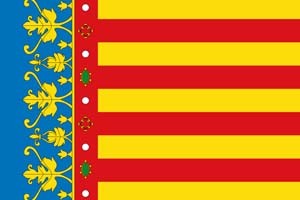
Afar - 1.4 million native speakers
Afar, the national language of the Republic of Djibouti, is also spoken in two other countries of the Horn of Africa: Ethiopia and Eritrea. It has been pushed into extinction by Arabic, which is considered the dominant language in education.
The powerful Google turning a blind eye to Afar doesn’t help to improve the dire state of the language. For those requiring a professional afar translation, PoliLingua provides the linguistic expertise that automated tools currently lack.
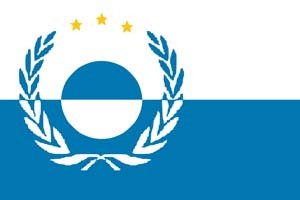
Valencian - 2.4 million native speakers
This is one of the European languages widely ignored by major online language translation tools.
As you can tell by its name, it is spoken in the Valencia region of Spain. The language issue has become very politicized in the Valencian Community. Some people believe Valencian is a ‘dialect of Catalan’ (Catalonia borders Valencia on the North), while others believe Valencian is an independent language created during Franco's dictatorship.
Valencian is not a dialect of Catalan, but a dialect of Latin, as is the case with Catalan, Castilian, or any other idiom spoken in Spain and derived from this original language.
As for Franco's alleged role in the creation of Valencian, it's not rocket science: Franco wanted to make Catalan disappear in favor of Castilian. Some Valencian intellectuals developed a kind of anti-Catalanism because they believed they were losing part of their Valencian identity in the face of Catalonia.
They may disapprove of Google’s behavior since the Internet behemoth hasn’t added Valencian as one of the working languages for the free online Translate service.
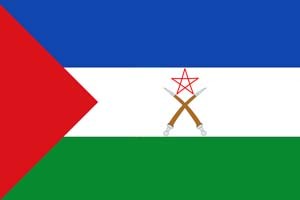
Bikol - over 2.5 million native speakers
In the South of the Philippine island of Luzon, at least 2.5 million people speak the Bikol language. Despite its large speaker base, Bikol remains unsupported by Google.
There are a few dialects of the language, and all of them are heavily influenced by Spanish due to the Philippines' colonial history.
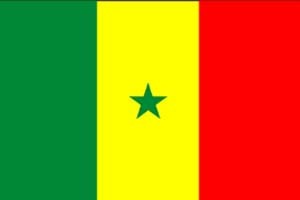
Wolof - 5.5 million native speakers
The most spoken language in Senegal is the wolof language. It is the native tongue of more than a third of the population and is understood by almost everyone.
Nevertheless, GT is still on the fence about providing an english to wolof translation.
At PoliLingua, we bridge this gap by offering professional wolof translation and english to wolof services to help businesses tap into the West African market.

Kirundi - 8.8 native speakers
Kirundi is the official language of Burundi and is also spoken in Uganda and parts of Tanzania. Interestingly, the phrase ‘Amaso y’inyana’ (eyes of a cow) is a high compliment in Burundi, symbolizing beauty.
However, you won’t find a reliable kirundi translator on Google. We provide specialized kirundi translation and kirundi translation services to ensure your message carries the right cultural nuances.

Akan - 9.5 million native speakers
Another African language missing representation is Akan. Spoken in Ghana, Cote d’Ivoire, and Togo, it has a rich history that traveled as far as the Caribbean.
If you require an akan translation or english to akan translation, our native experts are ready to assist where algorithms fail.
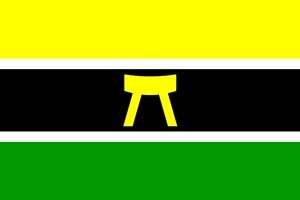
Assamese - 15 million native speakers
The assamese language is the official language of the Northern Indian state of Assam, the birthplace of world-famous tea. Despite its history dating back to before the 7th century CE, it is yet to make the list of GT languages.
We offer comprehensive assamese to english translation and english to assamese translation to support this vibrant linguistic community.

Bhojpuri - 40 million native speakers
Spoken in India, Nepal, and even parts of the Caribbean, bhojpuri translation is increasingly in demand. It is one of the most rapidly growing languages in the world, yet it remains ignored by major tools.
We provide expert english to bhojpuri translation for those looking to reach these 40 million speakers.
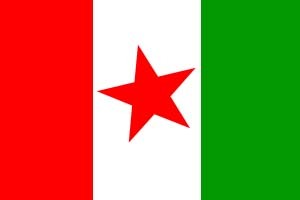
Maithili - 33.9 million native speakers
Another Indo-Aryan language without representation in GT, Maithili is one of the 22 official languages in India and the second most widely used language in Nepal. It is traditionally considered the language of the goddess Sita.
In conclusion
As you can see, the Google Translate tool is not always what it seems - with the obvious lack of contextual interpretation skills it is rather limited and though not always a solution. On the other hand, PoliLingua offers you professional quality translation services, localization, transcription services, voice-over, subtitling, and multilingual SEO in 100+ languages, including the ones we listed above.