

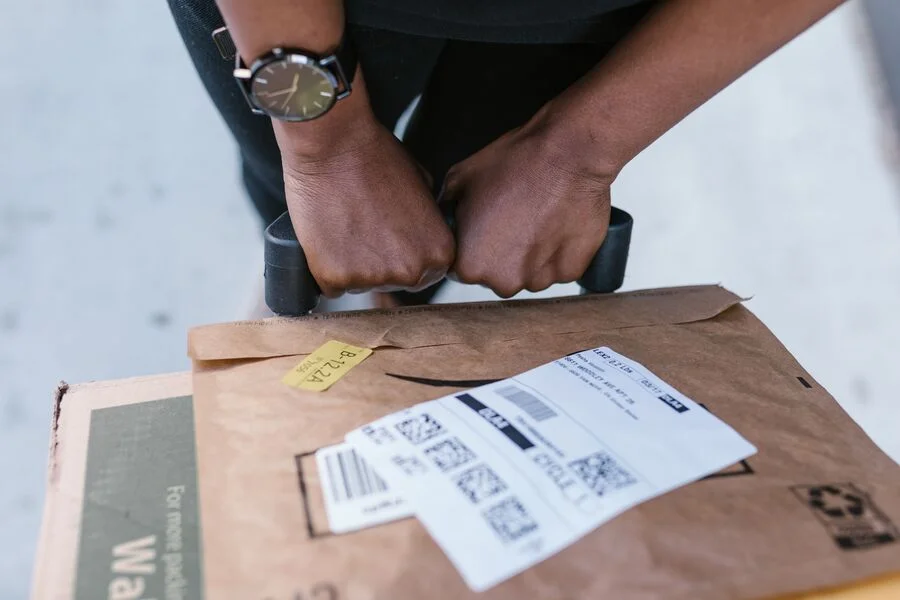
Imagine a US brand selling kitchen gadgets on Amazon.de, Amazon.fr and its own Shopify store. The product pages are in English with a quick machine translation, the warnings are printed in English on the box, and one morning Seller Central starts asking for safety information "in the language of the country of sale". Listings go inactive while the team scrambles.
That is GPSR in practice. Here is what the regulation actually says about language, what you need to translate, and how to do it without translating everything twice.
What Is The GPSR?
The General Product Safety Regulation, Regulation (EU) 2023/988, is the EU's main safety law for non-food consumer products. It replaced the old General Product Safety Directive and has applied since 13 December 2024, directly and in the same way in every EU country.
It also reaches sellers outside the EU. Under Article 4, a product sold online counts as made available in the EU if the offer is targeted at EU consumers, for example by shipping to them or selling on an EU marketplace. And under Article 16, a product cannot be placed on the EU market unless an economic operator established in the EU is responsible for it, often called the GPSR responsible person.
UK sellers should note one more detail: according to the UK government, the GPSR also applies directly in Northern Ireland.
What Does The GPSR Say About Language?
The regulation repeats the same rule in several places. Information must be in a language which can be easily understood by consumers, as determined by the Member State where the product is sold.
- Instructions and safety information (Article 9(7)). Manufacturers must make sure the product comes with clear instructions and safety information in that language, unless the product can be used safely without them.
- Importers (Article 11(4)). Importers carry the same obligation for the products they bring into the EU.
- Distributors (Article 12). Distributors, including retailers, must check this before selling, and must not make the product available until it complies.
- Online listings (Article 19). Every online offer must clearly show the manufacturer's details, the EU responsible person if the manufacturer is outside the EU, product identification with a picture, and any warning or safety information in the language of the country of sale.
- QR codes and digital information (Article 21). You may add information in digital form, but it must follow the same language rule.
- Recall notices (Article 36). If something goes wrong, the recall notice must be available in the language or languages of each country where the product was sold.
In practice, "as determined by the Member State" means the national official language or languages. Germany expects German, France expects French, and Belgium has three official languages. The regulation does not list languages itself, so always check the national rules for each market before you print.
Does Amazon Enforce It?
Yes. Marketplaces have their own obligations under Article 22, they must let sellers enter all the Article 19 information for each product, and suspend traders who frequently offer non-compliant products. Amazon's Seller Central asks sellers to upload pictures or a document with the product's warning and safety information in the language of the country of sale. For a brand selling in Germany, France, Italy, Spain and the Netherlands, that is five language versions per product.
GPSR amazon checks are not a one-off either. New listings and updated products need the same information, so translation has to become part of the listing process, not an emergency fix.
Got listings flagged or a launch coming up? Send us your safety texts and product pages and get a quote for every EU language you sell in, within 15 minutes. Get your free quote
What Do You Need To Translate?
For GPSR compliance, start with anything related to safety, then move to the rest of the listing.
- Warnings and safety information. Everything printed on the product, label or packaging, plus age warnings, choking hazards, battery and electrical warnings.
- Instructions for use. Assembly, installation, use and maintenance instructions. A professional user manual translation keeps terms identical to those on the label.
- Online product listings. The warnings and safety information shown on each product page, which must match what is on the physical product.
- Product descriptions and listing content. Not strictly required by Article 19, but a product description translation in the local language converts better and avoids contradictions with the safety text.
- Contact and recall information. Customer service pages and any template you would use for a recall notice.
One rule worth repeating: the text on the box, the manual and the listing must say the same thing. Inconsistent safety wording across three documents is exactly what market surveillance authorities look for.
Can You Use Machine Translation For GPSR?
For safety warnings, raw machine translation is a gamble. A warning that is grammatically fine but technically wrong is still a non-compliant warning, and it can mislead the very consumer it is meant to protect.
The practical balance is to separate the content. Safety texts and manuals get a professional linguist, ideally one specialised in technical document translation. Large catalogues of product descriptions can go through machine translation post editing, where AI produces the draft and a linguist reviews it, from $0.05 per word and down to $0.04 at volume. Our guide to MTPE rates explains the options.
Which Languages Should You Start With?
Start where you sell most. For many US and UK sellers, that means Germany first, then France, Italy, Spain and the Netherlands, the countries where large marketplaces have dedicated storefronts. Our German translation services are a natural first step for sellers on Amazon.de.
The smart move is to build a translation memory from the first language onwards. Safety phrases repeat across products, so every new product and every new language costs less than the last.
Selling in several EU countries? Send your product range and target markets and we'll plan the languages in order of priority, with one quote for all of them. Request your quote
How PoliLingua Helps With GPSR
We are an ecommerce translation services partner for brands and marketplace sellers: safety warnings, labels, manuals, listings and recall templates, into every EU language. Native linguists, translation memory to keep safety terms identical across products and countries, and automatic quality checks before delivery. Every project runs through our ISO 17100:2015 certified process, and PoliLingua is a member of ELIA and rated 4.7 out of 5 on Trustpilot.
Need the whole store translated, not just the safety texts? See our website translation services and AI translation services. Get your free quote