

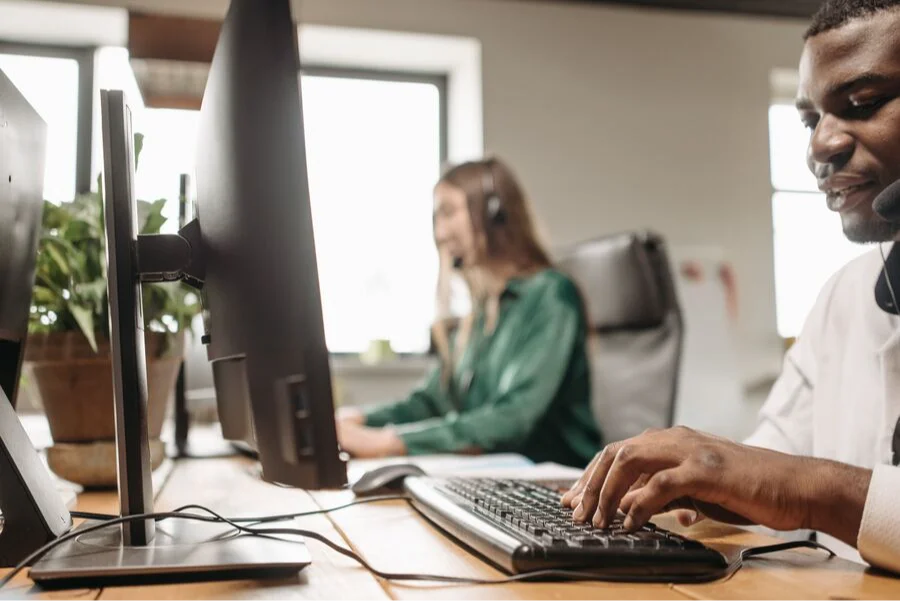
Phone interpretation, also called Over the Phone Interpretation (OPI) or telephone interpreting, is a three-way call service that connects two parties who speak different languages with a qualified interpreter in real time. The interpreter facilitates communication between both sides without being physically present.
In 2026, this has evolved well beyond a standard landline setup. OPI providers now use web-based VoIP platforms with automated routing, instant call connection, and AI-assisted queue management. The average connection time to a professional interpreter across leading providers is under 30 seconds for common language pairs.
The market that underpins this service is significant. The global telephone interpreting services market was valued at $2.5 billion in 2025 and is projected to reach $7.2 billion by 2033, driven primarily by healthcare and legal settings where immediate multilingual communication is not optional. What makes phone interpretation distinct from other interpretation modalities is the combination of speed, accessibility, and cost. It requires no equipment beyond a standard phone or device. It works in any location. It scales from a single unexpected call to thousands of daily interactions across a hospital system or call center.
When Phone Interpretation Is the Right Choice
Not every situation calls for the same interpretation modality. Phone interpretation is the right choice when these conditions apply:
- The Situation is Unscheduled. A patient calls without an appointment. A supplier calls unexpectedly. A walk-in arrives and the front desk needs help immediately. Phone interpretation handles the unplanned, it is the modality built for the moment you did not see coming.
- The Content is Conversational and Non-Visual. Scheduling, intake information, general inquiries, medication reminders, follow-up calls, benefits explanations, customer service, all of these work well by phone because they do not require the interpreter to see documents, facial expressions, or physical cues. The conversation is the entire interaction.
- Speed Matters More Than Setup. In an emergency department at 2 a.m., a nurse needs to triage a patient who speaks only Haitian Creole. There is no time to set up a video system or wait for an in-person interpreter. A phone call connects the nurse to a professional Haitian Creole interpreter in seconds. That speed is the value.
- The Volume is High and Unpredictable. Call centers, healthcare systems, government agencies, and legal intake teams often need interpretation for dozens or hundreds of contacts daily across many language combinations. Phone interpretation scales to that volume in a way that in-person or scheduled video interpretation cannot.
- The Budget is Constrained. Phone interpretation is typically the most cost-effective professional interpretation modality, less expensive than video remote interpreting and significantly less than in-person services, with no travel costs and no minimum booking time.
When Phone Interpretation Is Not the Right Choice
The honest version of this service requires acknowledging its limits, and they are real.
- When Visual Context is Essential. A physician explaining a complex diagnosis, a social worker assessing a child's safety, a physical therapist demonstrating a rehabilitation exercise, these situations depend on what the interpreter can see as well as hear. Research from a 2025 randomized study found that parents correctly named their child's diagnosis less often with telephone interpretation than with video, 59.8% compared to 74.6%. For high-stakes clinical conversations where visual cues matter, video remote interpreting or in-person interpretation is the stronger choice.
- When the Interaction is Formally Evidentiary. In legal settings, when the exchange involves sworn testimony, document review, credibility-sensitive questioning, or a proceeding where record integrity is required, phone may not be appropriate. Use phone interpretation to open the door, initial intake, conflict checks, scheduling, fact gathering, and switch to a higher-stakes modality for formal proceedings.
- When Dialect Mismatch is a Known Risk. A 2026 primary-care study found that dissatisfaction with telephone interpretation was associated specifically with dialect problems. If a patient speaks a regional dialect that standard interpreters in that language may not cover, Haitian Creole vs. mainland French Creole, Cantonese vs. Mandarin, Moroccan Darija vs. Modern Standard Arabic, confirm the provider's dialect coverage before committing to phone as the primary modality.
- When the Relationship Matters. Sensitive conversations about mental health, end-of-life care, domestic violence, or trauma benefit from continuity, the same interpreter who knows the patient's history, the same face on a screen, the physical presence of a professional. For ongoing therapeutic or case management relationships, in-person or video interpretation preserves the human dimension that a rotating pool of anonymous phone interpreters cannot.
Need a professional interpreter for an upcoming call or ongoing language access program? Polilingua provides on-demand phone interpreter services across 200+ languages, available 24/7 for healthcare, legal, business, and government settings. Request a quote or consultation to set up your organization's language access solution. Get a Quote
The Sectors That Rely on It Most
- Healthcare — the largest single use case for phone interpretation. The 25.5 million people in the US with limited English proficiency interact with healthcare systems constantly, scheduling, intake, discharge, pharmacy follow-up, after-hours nurse callbacks, benefits explanations. Phone interpretation handles each of these touchpoints without the overhead of in-person services. Hospitals and clinics that do not have phone interpretation available are not just inconveniencing patients, they are creating legal exposure under Section 1557 of the Affordable Care Act and Title VI of the Civil Rights Act.
- Legal Services — law firms use phone interpretation for initial intake, client outreach, scheduling, witness calls, and early fact-gathering across language barriers. It is the fastest way to establish basic communication accurately enough to move a matter forward. Court interpreters and certified legal interpreters are available through professional OPI providers for language-specific accreditation requirements.
- Government Agencies and Social Services — federal, state, and local agencies serving LEP populations have language access obligations under federal law. Phone interpretation is the most scalable way to meet those obligations across unpredictable contact volumes and language combinations.
- Insurance and Financial Services — policyholders filing claims, customers asking about coverage, beneficiaries navigating complex financial decisions, all of these benefit from a professional interpreter on the line rather than a bilingual staff member whose primary role is something else.
- Customer Service and Retail — for businesses with international customer bases, phone interpretation converts language barriers into completed sales and resolved complaints instead of lost customers and abandoned calls.
What to Look for in a Phone Interpreter Service Provider
The three things every OPI provider promises, broad language coverage, qualified interpreters, and on-demand access, are table stakes in 2026. They no longer separate one provider from another. The questions that actually matter:
- How Fast is the Connection? Average connection time under 30 seconds for common language pairs is the professional standard. Ask providers for their reported average, not their advertised target.
- What is the Interpreter Qualification Standard? Professional OPI providers use interpreters who are trained in the ethics of interpretation, subject-matter terminology for their specializations, and the specific requirements of the settings they serve. Ask whether interpreters are tested, certified, and continuously evaluated, or simply bilingual.
- What is the Dialect Coverage? Language coverage by number means little if the provider cannot match a Tigrinya speaker from Eritrea with an interpreter who speaks that specific dialect rather than a neighboring language. Confirm specific dialect availability for the language combinations your organization needs.
- How is the Call Routed? Modern OPI platforms route calls based on language, specialization, availability, and, for organizations that need it, interpreter continuity for ongoing cases. Understanding the routing logic tells you whether the system is designed for your use case or a generic one.
- What Does the Pricing Model Actually Cost? Per-minute rates look simple but can become complex with after-hours charges, minimum commitments, dedicated pool fees, and volume tiers. Ask for a full cost breakdown for your projected monthly usage, not a per-minute headline number.
Frequently Asked Questions
- How Quickly can I Reach a Phone Interpreter? With a professional OPI provider, connection times for common language pairs average under 30 seconds. Less common language pairs may take slightly longer depending on interpreter availability at the time of the call. Polilingua provides 24/7 on-demand phone interpretation across 200+ languages.
- Do I Need Special Equipment for Phone Interpreter Services? No. Phone interpretation requires only a standard phone, mobile device, or computer with a calling capability. No additional hardware, software, or technical setup is needed for basic OPI. Some organizations integrate OPI into their existing phone systems or patient management platforms, that integration is optional, not required.
- Is Phone Interpretation Legally Compliant for Healthcare and Legal Settings? Yes, when the interpreter meets the qualification standards required by the relevant regulations. For healthcare, Section 1557 and Title VI require that interpreters be qualified, professional training, demonstrated competence, understanding of confidentiality obligations, and awareness of the ethics of medical interpretation. A bilingual staff member or family member does not meet this standard. A professional OPI provider whose interpreters are trained and qualified does.
- When Should I Use Video Remote Interpreting Instead of Phone? Use video remote interpreting when the conversation involves visual cues that affect understanding, explaining a diagnosis with images, demonstrating a physical process, conducting a mental health assessment, or any interaction where seeing the interpreter and being seen matters to the quality of the exchange. Use phone when the conversation is primarily verbal and speed or simplicity is the priority.
- How is Phone Interpretation Priced? Most professional OPI providers price by the minute, with rates varying by language pair and time of day. Common language pairs (Spanish, Mandarin, French, Arabic) are typically lower per minute than rare language pairs. Many providers offer monthly packages or volume tiers for organizations with predictable usage. Polilingua provides transparent per-minute pricing with no hidden fees, contact us for a quote based on your organization's expected usage.
Need Professional Phone Interpreter Services for Your Organization? Polilingua provides on-demand phone interpretation across 200+ languages, 24/7 availability, under-30-second connection times for common language pairs, and professionally trained interpreters for healthcare, legal, government, and business settings. Request a quote and we will have a proposal ready within 24 hours.