

Polish to English translation is the process of turning Polish text into accurate, natural English while keeping the grammar, tone and meaning intact. Free tools cope with simple phrases, but a professional translator is the safer choice whenever a text carries legal, commercial or personal consequences.
Polish is one of the most widely spoken Slavic languages, with about 40 million speakers worldwide according to Wikipedia, and demand for Polish to English translation keeps growing across business, education and migration. The trouble is that Polish was built very differently from English, and those differences are exactly where automatic tools lose accuracy.
Why is Polish so hard for machine translation?
Polish uses seven grammatical cases, so the ending of a noun changes depending on its role in the sentence. English has almost no equivalent, which means a tool has to guess the relationship between words. When it guesses wrong, who did what to whom can flip without any visible warning.
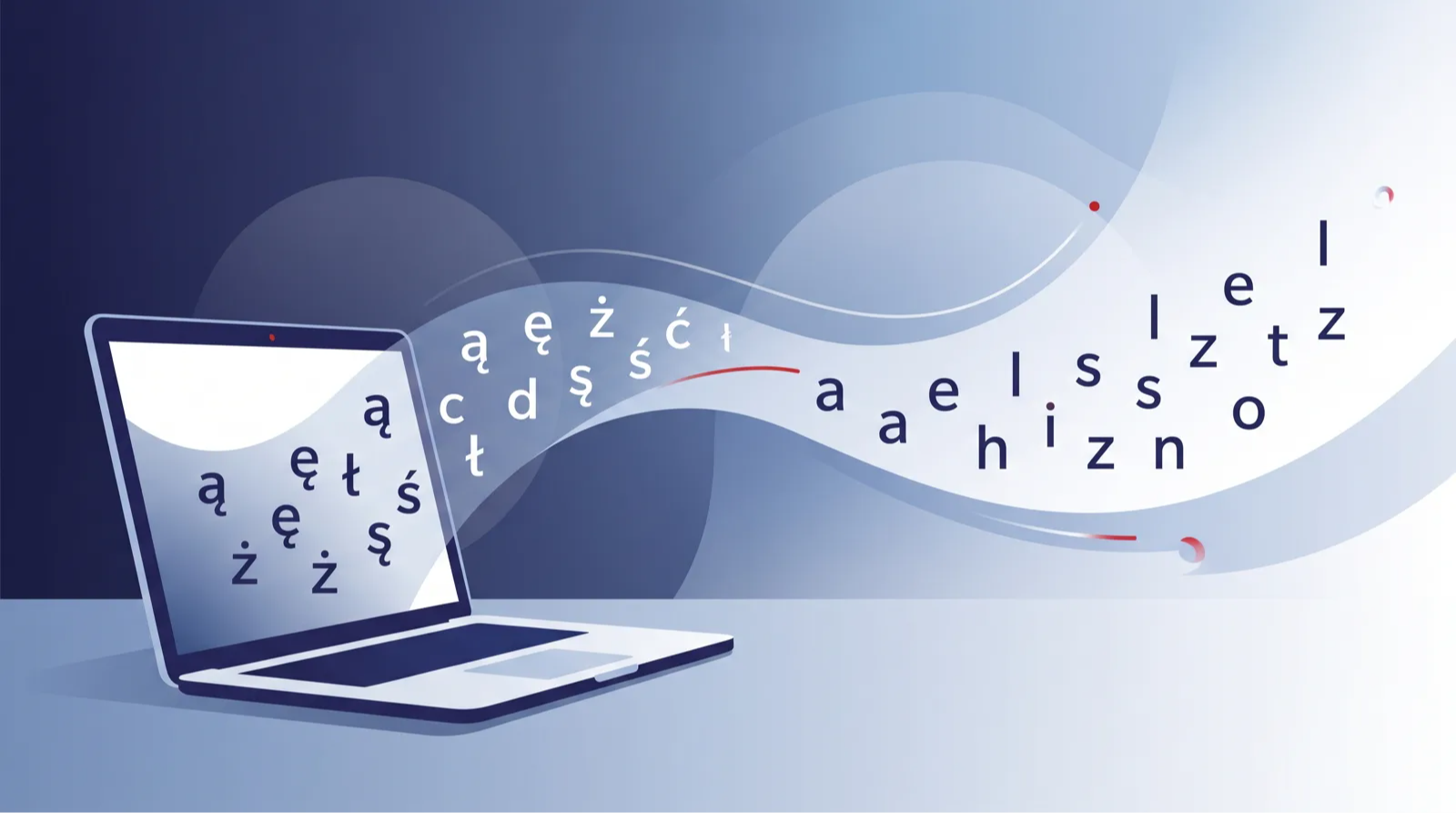
Diacritics add a second layer of risk. Letters such as ą, ę, ł and ś are not decoration. The word sad means an orchard, while sąd means a court. A text typed quickly on a phone without Polish characters can be translated confidently into the wrong meaning.
Gender and formality are the third trap. Polish past tense verbs carry the gender of the speaker, so byłem and byłam both become “I was” in English, and the reverse direction needs context a tool rarely has. The choice between ty and the formal Pan or Pani also signals respect, and getting it wrong in a business email can sound either cold or rude.
Which Polish words trick English speakers?
False friends cause some of the most common errors. The Polish ewentualnie means “possibly” or “alternatively”, not “eventually”. Aktualnie means “currently”, not “actually”, and sympatyczny describes someone nice and pleasant rather than sympathetic. A tool that matches words by surface similarity may pick the wrong sense, and in a contract or an email to a client the difference between “possibly” and “eventually” changes the promise being made.
Google Translate or a professional Polish translator?
Both have a place. The real question is how much a mistake would cost you. The table below shows how most readers should decide.
| Situation | Free machine tool | Professional translator |
|---|---|---|
| Understanding a casual message | Usually good enough | Not needed |
| Contracts, invoices and terms | Risky, one wrong term can change an obligation | Recommended |
| Website and marketing content | Literal and off brand | Recommended, with localization |
| Documents for authorities or courts | Rarely accepted | Certified translation required |
| Confidential business files | Text is processed by a third party | Covered by a confidentiality agreement |
What does a professional Polish translator add?
A qualified linguist reads the Polish source the way a native speaker does, understands the industry behind it, and writes English that sounds like it was never translated. Agencies that follow a proper process add a second linguist who proofreads the result, keep terminology consistent across projects, and take responsibility for the final text. That accountability is what you pay for, and it is what a free tool cannot offer.
If your content needs to be accurate and ready to use, our team provides polish translation services handled by native speakers and reviewed before delivery. For companies that work in several languages at once, the same workflow is available as professional translation services.
How do AI tools and human translators work together?
The most efficient modern workflow is not human against machine. Many agencies run machine translation for a first draft and then have a qualified Polish linguist edit it, a method known as post editing. This can speed up large projects with repetitive content, but the human step is what catches wrong cases, missing diacritics and tone problems. For sensitive or creative texts, translating from scratch is still the better route, since a draft with hidden errors can take longer to repair than to write correctly.
Which Polish texts should always go to a professional?
Anything that represents your company or creates obligations deserves human attention. That includes contracts and commercial offers, product descriptions and website pages, user manuals and technical documentation, medical and pharmaceutical information, and official letters to authorities. Marketing copy needs particular care, because a literal rendering of a Polish slogan can sound awkward or unintentionally funny in English. A professional translator adapts the message so it persuades an English reader instead of simply repeating the words.
When do you need a certified Polish translation?
Certified translation is required when an official body must rely on the translation, for example in immigration cases, court proceedings, university admissions or company registration. The translator signs a statement confirming the text is complete and accurate, which gives the receiving office a reason to trust it. Our page on certified translations explains what each authority usually asks for.
How do you choose a Polish translator?
- Check that the translator works into their native language, so English output comes from a native English writer.
- Ask whether the project includes a second review by another linguist.
- Look for experience in your field, such as legal, medical or technical writing.
- Confirm how confidential files are stored and who can access them.
- Request a clear quote that states word count, deadline and any certification.
Frequently asked questions
How accurate is machine translation from Polish to English?
It is reliable for the general gist of short, simple sentences. Accuracy drops with long sentences, specialist vocabulary, missing diacritics and idioms, so any text that will be published, signed or submitted should be reviewed by a human translator.
Is English to Polish translation handled the same way?
The process is similar, but the best results come from a native Polish writer, because Polish grammar and formal register are harder to get right than English. This is why English to Polish translation should always be done by a translator working into their mother tongue.
How long does a professional translation take?
It depends on length, subject and whether certification is needed. A short document is usually ready within a day or two, and larger projects are planned with a project manager so the deadline is agreed before work starts.
Polish to English translation rewards a careful approach. Use free tools to understand a message, and bring in professionals whenever accuracy, reputation or compliance is on the line.