

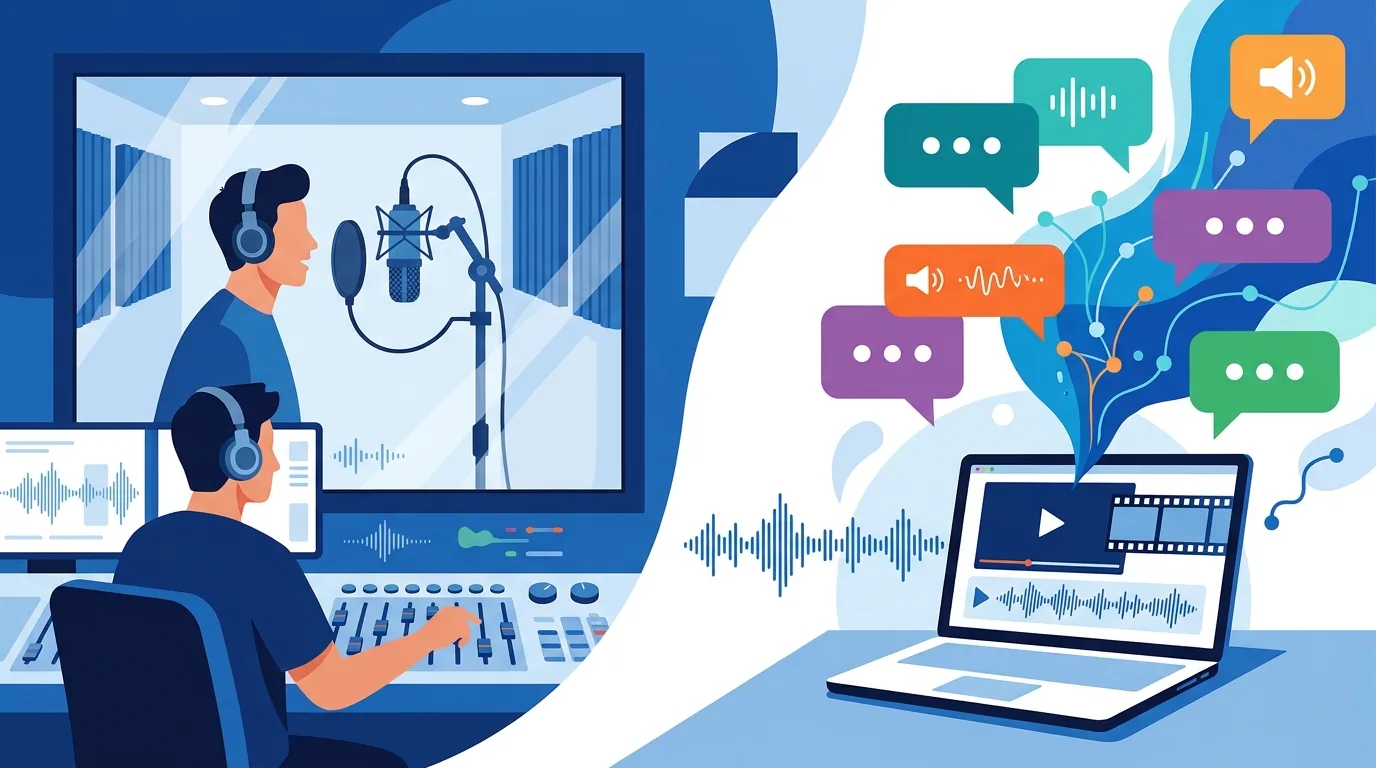
A video recorded in one language reaches only the viewers who understand it. Audiences in other markets will watch a product tutorial, a training course or a drama series if it speaks their language, and video localization is how it gets there.
Teams that want those viewers have two routes. They can book a studio session for every language, or use AI tools such as ElevenLabs' video dubbing to generate multilingual speech that keeps parts of the original speaker's delivery. The right route depends on what the footage has to do.
Choosing wrong costs either budget or credibility. Studio sessions for a biweekly explainer drain the schedule, while an unreviewed generated track on a character-driven scene can break the story. Knowing where AI video dubbing works and where a studio is still needed saves both.
ADR and Language Dubbing Serve Different Purposes
Automated dialogue replacement (ADR) is a post-production step in which an actor re-records dialogue after filming. ADR in film is used when traffic, wind or equipment noise ruins an on-set take, or when a director wants to change a line. Despite the name, traditional ADR is human-led: actors repeat lines while watching the scene, then editors sync the new recordings to the picture and mix them into the soundtrack.
Language dubbing replaces the original dialogue with a translated performance for another market. Studio dubbing brings together translators, voice actors, directors and sound editors, who adapt and record each role. It may borrow ADR-style looping to match on-screen speech, but it also demands decisions about meaning, idiom and cultural context. AI has changed the second job far more than the first.
How AI Dubbing Changes the Video Localization Workflow
An AI dubbing process can start from an existing video or audio file. The system translates the dialogue, speaks it in a voice modeled on the original speaker and aims to line up starts and stops with the source, then the new track is mixed back with the music and effects. ElevenLabs describes its dubbing as carrying over the speaker's pitch and tonality across more than 90 languages. We have looked at how AI dubbing is redefining video production in an earlier post.
Take a software company that publishes product tutorials every two weeks. Recording each update in several languages means repeated script preparation, talent bookings and editing. AI drafts let the localization team prepare versions earlier, check product terminology and revise lines before approving the audio. Creators can use the same approach for interviews, educational videos and regular channel updates.
Automation still needs a review stage. Names, measurements, specialist terms, humor and regional expressions can be translated poorly or pronounced wrongly. A native-speaking reviewer should check the dialogue in context instead of relying on the transcript alone, which is the same check a professional video translation service applies to subtitles and scripts. Speed is the strength here, and acting is where it runs out.
Where Traditional Studio Recording Still Matters
A generated voice can keep a speaker's broad vocal character, yet complex acting involves more than matching pitch and timing. A line can carry hesitation, sarcasm, grief or a sudden change of intent. A voice actor reads those cues, takes direction and reshapes the performance for the director. A translator can also rework a sentence so it sounds natural in the target language and still fits the scene.
Studio recording earns its cost when dialogue must match visible mouth movements, when a character's performance drives the story or when a production needs a specific regional accent. Engineers can refine breaths, room sound and the balance between dialogue, music and effects. Those details matter in films and premium series, where audiences expect each localized performance to feel part of the original. This is the work that professional dubbing services and multilingual voice-over with native voice talent are built for.
Choosing a Dubbing Workflow That Fits the Content
AI dubbing suits high-volume material such as product explainers, training videos, creator updates and internal communications. It cuts the number of recording sessions and lets teams prepare several language versions from one source. Studio work fits feature films, character-led animation and emotionally demanding scenes where performance direction is essential.
Many productions land in between. A team can generate an initial localized track, have native speakers correct the script and pronunciation, then bring actors in for the scenes that need closer attention. Some platforms, ElevenLabs among them, pair the self-serve tool with human translators, voice casting and professional mixing for broadcast work. Any cloned voice should be used only with the speaker's informed permission and clearly agreed usage rights, a point we cover in our guide to AI voice cloning and dubbing.
Make Quality Checks Part of the Plan
Judge the finished video by how naturally it speaks to the intended audience, and treat turnaround time as a secondary measure. Check meaning, names and specialist vocabulary, listen for consistent voices and review scenes where the speaker's face is visible. Test the dialogue with music and effects in place, since a clear voice can still feel detached from the scene once the full mix is back.