

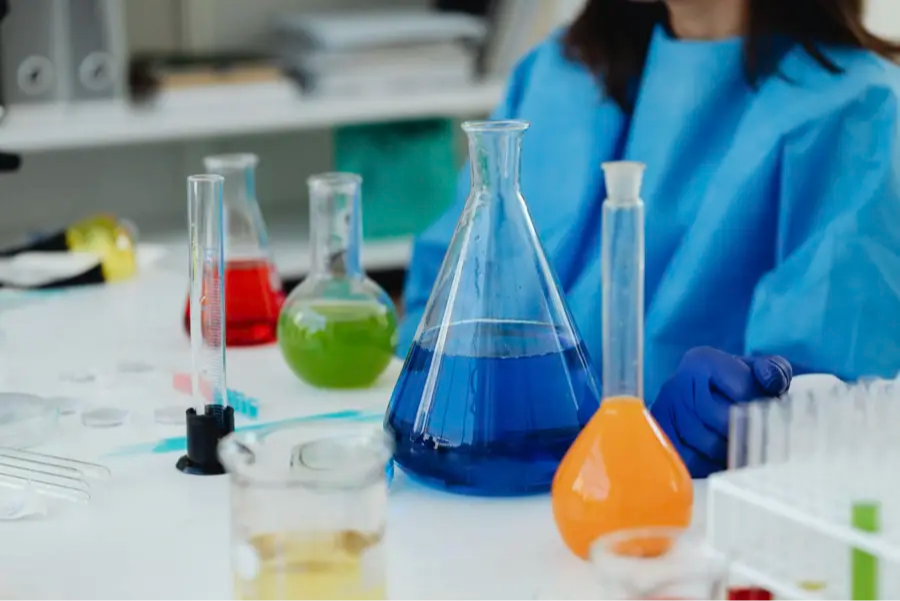
Precision is the lifeblood of the modern laboratory. In an environment defined by rigorous standards, every milligram and every milliliter is meticulously accounted for to ensure the integrity of a reaction. However, a critical variable often goes overlooked until a mistake occurs: the language used to communicate these data. When research, safety protocols, and complex chemical specifications cross international borders, the margin for error effectively vanishes. By acting as a vital failure-prevention mechanism, specialized linguistic support ensures that technical data remains as precise in a target language as it was in the original source.
The High Stakes of Laboratory Safety and Compliance
Safety is the cornerstone of any functional laboratory. Whether you are dealing with academic research, industrial quality control, or pharmaceutical development, the presence of hazardous materials necessitates crystal-clear communication. This is where specialized chemical translation services become an essential part of the infrastructure.
Central to this safety net is the documentation regarding hazardous materials. In the modern regulatory environment, Safety Data Sheets translation is not optional; it is a legal requirement for international trade. An SDS is the primary source of information for handling, storing, and disposing of chemicals. If a translator lacks a deep understanding of the Globally Harmonized System (GHS), they might use a term that sounds correct in common parlance but lacks the specific legal weight required by regulators.
A mistranslated "Signal Word" or "Precautionary Statement" in an SDS translation can lead to the improper use of Personal Protective Equipment (PPE), resulting in chemical burns, inhalation of toxic fumes, or even laboratory fires. Reliable SDS translation services ensure that these 16-section documents meet the exact linguistic and regulatory standards of the destination country, such as REACH in Europe or OSHA standards in the United States.
Accuracy Through a Chemical Formula Translator
One of the most complex aspects of laboratory documentation is the transition from prose to notation. Scientific papers and lab manuals are dense with reaction schemes and stoichiometry. While automated tools might attempt to parse these, they often struggle with the specific syntax of chemical bonds, oxidation states, and catalyst notations.
A human chemical formula translator a linguist with a background in chemistry understands that symbols are a language unto themselves. They ensure that subscripts, superscripts, and arrows indicating equilibrium or gas evolution are preserved and positioned correctly. In a laboratory setting, misinterpreting a molar concentration or a reaction condition (such as 180°C vs 18°C) can ruin months of research or lead to volatile runaway reactions. By ensuring these formulas are translated with 100% fidelity, professional services provide a safety net for the scientists on the ground.
Mitigating Risk in Equipment Calibration and Usage
Modern laboratories are filled with sophisticated instrumentation: Gas Chromatographs, Mass Spectrometers, and NMR machines. These devices often come with complex user manuals and software interfaces that require translation for global teams.
When a chemical translation service handles these manuals, they aren't just translating words; they are translating instructions for use (IFU). If a technician in a satellite lab in Brazil misinterprets the calibration steps for a high-pressure liquid chromatography (HPLC) system because of a poorly translated manual, the resulting data could be skewed. In the pharmaceutical world, skewed data can lead to the failure of clinical trials or the distribution of ineffective medication. Safeguarding laboratory operations means ensuring that every technician, regardless of their native tongue, can operate equipment with the same level of confidence and accuracy.
Protecting Intellectual Property and Research Integrity
For many organizations, the laboratory is where the "crown jewels" of the company its patents are born. Chemical translation plays a pivotal role in protecting these assets. When filing a patent application in multiple countries, the description of the chemical synthesis must be airtight.
Vague terminology or the incorrect naming of a chemical isomer can create "holes" in a patent that competitors can exploit. Professional translators who specialize in chemistry understand the difference between "enantiomers" and "diastereomers," or "aliphatic" and "aromatic" compounds. They ensure that your intellectual property is defended by a wall of precise language that leaves no room for misinterpretation by patent examiners or rival firms. In the high-stakes world of IP, a single mistranslated functional group can be the difference between a secure patent and a lost invention.
Streamlining International Collaboration
We live in an era of "Open Science" and global R&D partnerships. A lab in Germany might be synthesizing precursors for a lab in Japan to test. This collaboration relies on the seamless transfer of "Lab Notebooks" and "Standard Operating Procedures" (SOPs).
By utilizing professional chemical translation services, organizations can ensure that their SOPs are standardized across all global locations. This consistency prevents the "translation drift" that occurs when informal internal translations are used. When every lab in your network follows the exact same translated instructions, your results become reproducible the gold standard of scientific achievement. Furthermore, maintaining high-quality sds translation across your supply chain ensures that every partner in the research cycle is aware of the specific hazards associated with the materials being exchanged.
The Blueprint for Chemical Translation
Our approach to safeguarding your lab involves:
-
Subject Matter Experts (SMEs): Our translators are often former chemists or engineers who understand the practical realities of lab work.
-
Regulatory Knowledge: We stay updated on GHS, REACH, and local safety standards to provide flawless Safety Data Sheets translation.
-
Glossary Management: We develop and maintain client-specific databases to ensure that your specific nomenclature is used consistently across every document.
-
Multi-Stage Review: Every technical document undergoes a rigorous quality control process to catch even the smallest notation errors.
The Essential Bond Between Data and Safety
In the high-precision world of science, there is no such thing as an "approximate" translation. A laboratory is only as safe as its most recent update, and a global business is only as secure as its most accurate document. Whether you are navigating the complexities of sds translation services to meet international safety standards or requiring a specialized chemical formula translator to preserve the integrity of your research, the quality of your linguistic partner is a direct reflection of your commitment to excellence.
By investing in professional chemical translation, you aren't just converting words; you are building a bridge of trust between your innovation and the global market. At Polilingua, we ensure that your Safety Data Sheets translation and technical manuals are handled with the same rigor you apply in the lab. In an industry where a single reaction can change the world, we make sure your message is never lost in translation.