

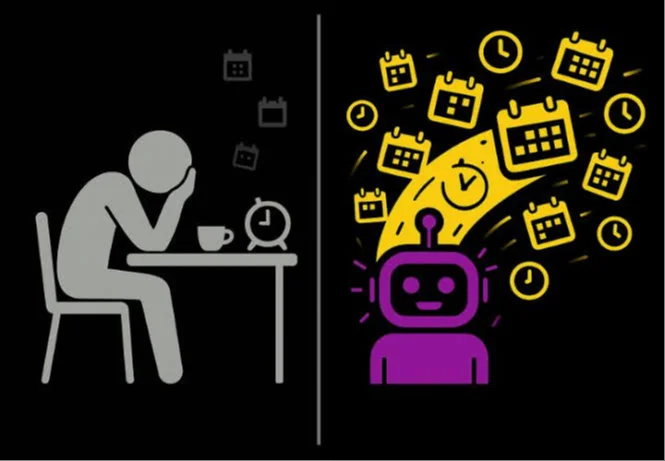
Just some 5-10 years ago, businesses that wanted to expand their reach had to make one of two challenging choices. Either they hired a multilingual team of human operators, or they gave up on their ideas of expansion and stuck to their local markets. The first choice resulted in huge costs, so only some companies could afford it, the second choice meant rejecting any hope for growth.
In 2026, things have changed drastically. More and more businesses implement AI translation in support, this gives them the opportunity to serve clients from any corner of the world with minimal effort. Find out how this coil of technical evolution came to be and what multilingual customer support can do for businesses.
The Role of AI in Current Multilingual Customer Support
AI studies similarly to children, by listening to millions of examples and learning how to recognize and differentiate between them. Apart from covering these basics, it can also provide translation in real time and display the personality its owners prefer. When businesses implement Clerk AI and allow it to absorb their unique brand voice, they get a smart assistant that can talk to their prospective clients, answer their questions, solve their problems, and book meetings with actual company representatives. And that’s just a part of it, let’s consider the full sphere of AI support capabilities.
Multilingual AI Assistants
The first and most important feature of AI assistants is that they’ve broken through all the existing language barriers. Now, they can adapt to any language and speak in a way every user understands, regardless of where they are from. Here is what they do:
- Instant Translation. Due to their smart learning, AI assistants instantly process the customer’s request, determine their language, and respond in kind, it barely takes a second.
- Contextual Understanding. Unlike standard Google Translate, AI assistants can understand intent. If a customer complains about access issues, the assistant will quickly determine whether the problem stems from the lack of required product or technical login issues.
- Limitless Scalability. Just one quality AI assistant can serve millions of clients. The system is automatic, so it can withstand all sorts of pressure, your business can grow at its own pace without incurring extra expenses.
Small businesses lack the resources to build a multilingual human support team, so getting AI assistants is their best bet. With these new opportunities, even the most modest startup from the US can reach customers in Europe, Africa, and Asia.
Localized Chatbots
Companies that are riding the latest tech edge can equip businesses with localized AI chatbots. Such models are valued more than standard translation assistants, they can actually adapt to what and how a client is saying.
- Cultural Sensitivity. Clients respond better when they feel like their culture is respected, even when it’s an AI bot speaking to them. So, Japanese customers receive more formal treatment, while Brazilian ones enjoy a warmer version of AI.
- Regional Variations. Smart AI chatbots that underwent localization can easily distinguish between different versions of Spanish, French, Chinese, etc.
- Localized Content. When the AI chatbot is smart and businesses trust it, they can allow it to adjust promotions and other offers to clients depending on where they are from and what services they are interested in.
The more careful the localization is, the easier it is to create trust between customers and businesses.
Automated Customer Service
Apart from translating and speaking to clients, AI customer service can be responsible for bigger chunks of business workflows. Let’s see a couple of examples:
- Ticket Resolution. Modern AI support can easily categorize the requests it gets and solve the easier ones without having to bother human operators.
- Voice AI. There are voice AI models of customer support, and they can take care of phone calls, reducing the load on human managers.
- A Bridge Between Humans. Modern AI assistants can recognize when the issue is too complex for them to handle, so they are equipped with the ability to forward the ticket to humans for extra clarification or complete human resolution.
This kind of automation reduces costs to a great extent while allowing businesses to serve their clients diligently.
Benefits and Limitations of AI Customer Support for Businesses
Now, let’s do a recap of the benefits of AI support while also reviewing some of its drawbacks.
Pros
- Global Reach. Multilingual customer support can serve clients in their language easily, adapting to their style of speaking and their regional nuances.
- Saving Time. Since AI bots can respond to queries in seconds, this saves time for both clients and businesses. The clients don’t need to wait to get their answers, while businesses can free their operators from a flood of requests.
- Cost Reduction. It’s much cheaper to use AI support to respond to basic queries than to hire extra multilingual operators, a lot of boring, routine processes can be automated now.
- Easy Scaling. AI is limitless, so it can address thousands of requests at the same time, helping each individual customer with their problem and in their language.
Cons
- An Accidental Loop. Sometimes AI chatbots run into a dead end, they can’t understand the request and keep asking the same questions, which only frustrates the customers.
- Privacy Concerns. To enable their AI systems to reply properly, companies have to share a lot of sensitive business data with them, which may compromise their privacy.
- Translation Errors. Even the most perfect AI systems can make mistakes, especially when it comes to slang, idioms, or highly technical terms.
There is hope that with time, the number of drawbacks will drop to a minimum, and businesses and clients will be able to enjoy the many benefits of AI customer support.
The Balance Between Multilingual AI Help and Human Attentiveness
AI support has become a vital part of communication in companies around the world, largely due to its multilingual features. Better models can mimic your brand voice, they have the ability to rank the quality of leads and solve client problems at early stages, speaking the exact same language and even dialect a client does.
With so many benefits, it’s clear why businesses choose to implement AI customer support. It has limitations for sure, which is why human involvement remains essential, but it saves time for human managers and allows them to focus on serious issues only. Decide what model you need, how many languages you’d like it to support, and what responsibilities you’d like to assign to it, in no time at all, the perks will become obvious.