

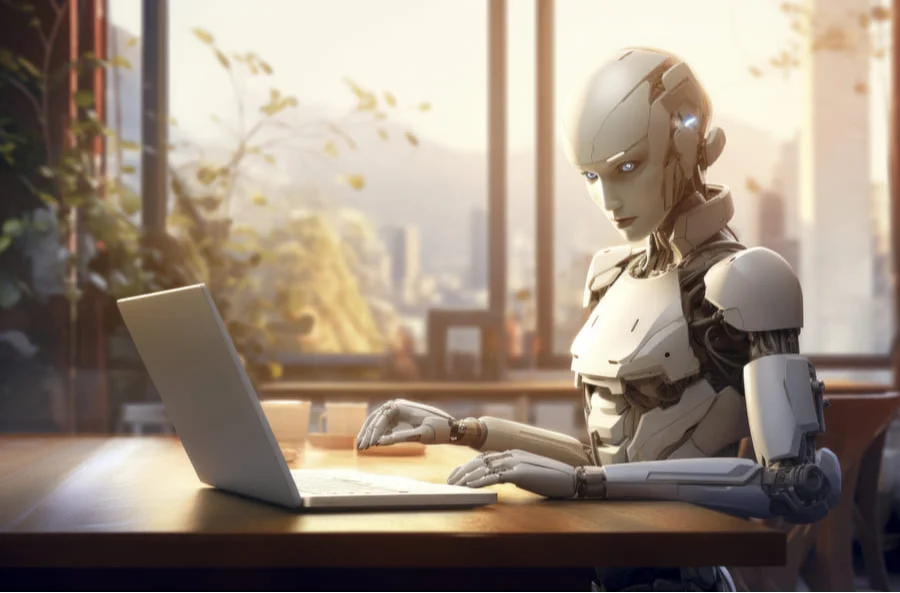
Teams are increasingly working remotely. Meeting participants often speak different languages. Given this, the importance of accurately recording conversations is growing simultaneously. However, we now have technologies that allow us to automate the recording process. We can also use them to structure information. At the same time, professional translators are also needed to preserve meaning and cultural context. And this is where the synergy between AI and human translation creates opportunities. The ones for effective communication and collaboration at the international level.
AI Tools and Conversation Recording
AI assistants for conferences record key messages instantly. This simplifies further analysis and decision-making. During Google Meet, AI note takers, real-time transcription, and automatic summaries allow participants to listen more than write. As a result:
-
The quality of meeting notes is significantly improved.
-
The risk of losing important details is reduced.
You can take a closer look at how modern tools work to better understand their capabilities. In particular, by entering the AI note taker for Google Meet query, you can learn that such a note taker automatically records conversations in the background, transforms them into transcripts, and generates clear summaries with action items. This tool can be integrated with Google Docs, Slack, or CRM. It also supports over 100 languages and makes meeting notes searchable. This gives the team clear summaries immediately after the meeting. So they don't waste time manually organizing data.
Automatic Recording and AI Note-Taking. Advantages
-
Automatic note-taking speeds up the creation of minutes and reduces the human factor. Thanks to language and voice recognition algorithms, AI notes allow you to have detailed minutes with speaker and time stamps. Automation also allows you to get action items right away.
-
Saved meeting notes become searchable documents. The tools also generate action items and priority lists. This helps the team move faster from discussion to execution.
-
Integration makes these processes part of the usual workflow.
-
The ability to store language notes in a centralized repository increases accessibility.
Professional Translation in Multilingual Teams. Practical Use Cases
Although automatic transcription and translation have improved significantly, machine translation sometimes misses idioms or cultural nuances. Professional translators adapt language notes to the target audience. This ensures the accuracy of terminology and style. Translation is not only about conveying words, but also about conveying intentions and tone. Localization professionals work to ensure that content is culturally appropriate. It's especially important when exchanging materials between teams with different legal environments. After all, incorrectly translated phrases can lead to mistakes in project implementation.
Practical scenarios
-
In sales, meeting notes and automatic summaries help to record customer promises and agreements. These can then be transferred to CRM. AI note takers reduce the time spent preparing reports. This allows managers to focus on strategy and working with customers.
-
During interviews, automatic transcripts allow recruiters to compare candidates and share excerpts with the team. This helps speed up decision-making and create more objective reports.
-
In multinational research groups, language notes and professional translation allow results to be synthesized while maintaining the accuracy of terminology. This speeds up publications and collaboration between laboratories in different countries.
Combining AI and Live Translation. Practical Tips
Set standards for meeting notes.
Determine which elements need to be corrected manually and which can remain automatic.
Incorporate revision by translators.
This way, you'll get better final documents and keep your corporate voice consistent across languages. Make sure there's feedback between translators and teams.
Keep things transparent and private.
Let people know about recording, saving, and accessing meeting notes. Pick services with strong encryption and access control.
Integration Into Workflows. Technical Recommendations
The recommended workflow for international teams includes the following steps:
- Recording and transcription during the meeting;
- Preliminary cleaning and structuring of AI notes;
- Transfer of materials to translators for localization;
- Final validation and distribution of meeting notes among stakeholders.
Create standard templates, glossaries of terms, and checklists for quality control.
Technical tips
Use Chrome extensions or integrations that provide speaker diarization, timestamps, and the ability to export to various formats. Save separate files with language notes for each language segment. This way, you'll make the translators' work and internal search easier. Regularly check the accuracy of speech recognition. Add specific corporate terminology to dictionaries. This will improve the quality of note taking in the future.
So, the combination of AI note-taking and professional translation creates a reliable bridge between languages and cultures. Automatic conversation recording reduces information loss and saves time. At the same time, human translation restores nuances and meaning. Together, these approaches increase team productivity and make meetings more effective. As a result, they open up new opportunities for global collaboration.