

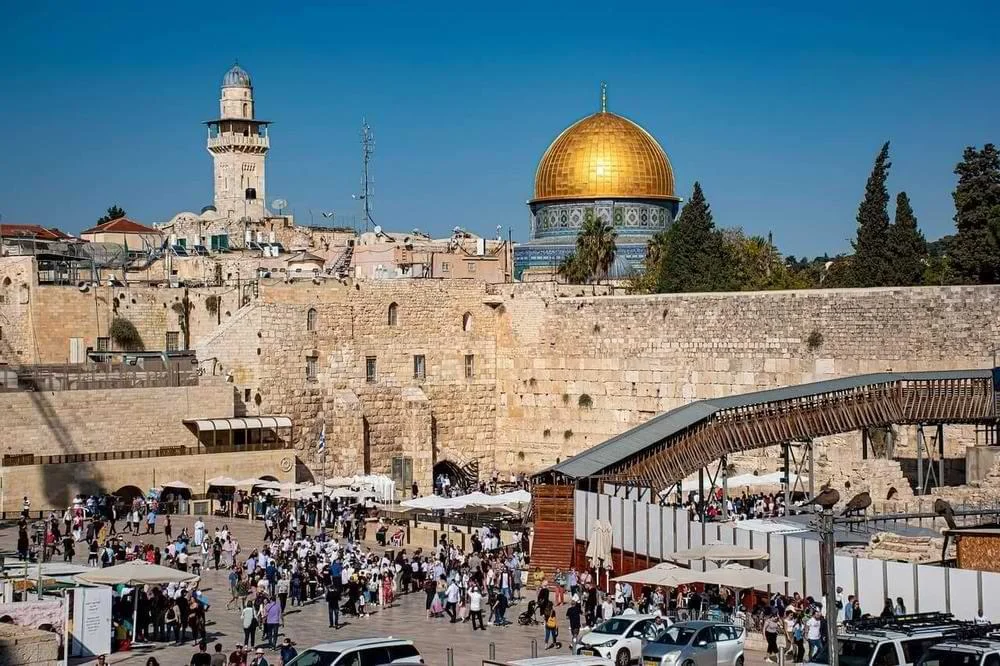
Israel has long been described as a "melting pot," and nowhere is this more evident than in the auditory experience of walking down a street in Tel Aviv, Haifa, or Jerusalem. As we move through 2026, the language of Israel continues to reflect a complex history of ancient revival, regional roots, and global migration. While the state is geographically small, roughly the size of New Jersey, it is home to a staggering array of dialects and tongues.
Understanding the languages spoken in Israel requires looking beyond simple labels. It involves navigating the legal nuances of the national language of Israel, the cultural weight of minority dialects, and the practical dominance of global languages like English.
What is the National Language of Israel?
The national language of Israel is Hebrew. This status was formally anchored in the Basic Law: Israel as the Nation-State of the Jewish People, passed in 2018. Before this legislation, both Hebrew and Arabic held official status, a legacy of the British Mandate era. Today, the law explicitly states that "Hebrew is the language of the state."
The revival of Hebrew is often cited as a modern linguistic miracle. In the late 19th century, Hebrew was primarily a liturgical language used in prayer and study. Through the efforts of figures like Eliezer Ben-Yehuda and the Zionist movement, it was transformed into a vibrant, everyday vernacular. By 2026, Hebrew is the primary israel language for government, education, and the legal system, spoken fluently by nearly 90% of the population.
Documents issued in Israel, birth certificates, legal contracts, academic diplomas, often require certified or sworn translation to be accepted by foreign authorities, courts, or immigration services.
Official Languages in Israel and the Status of Arabic
While Hebrew is the sole national language, the status of other official languages in Israel, specifically Arabic, is a subject of significant legal and social importance. The 2018 Nation-State Law downgraded Arabic from an "official language" to a language with a "special status."
Despite this change in nomenclature, the law stipulates that the use of the Arabic language in state institutions will be regulated by specific legislation and that its status should not be harmed in practice. Arabic remains the mother tongue of approximately 21% of the population. It is the primary language for Israel's Arab citizens, including Muslims, Christians, and Druze. It remains visible on road signs, food labels, and government documents, reflecting its deep indigenous roots in the region.
What are the Top 3 Languages Spoken in Israel?
For those asking what are the top 3 languages spoken in Israel, the answer is:
-
Hebrew: As the state language, it is the most widely spoken.
-
Arabic: Spoken natively by over 2 million citizens.
-
Russian: Thanks to the massive wave of immigration from the former Soviet Union in the 1990s, Russian is spoken by roughly 1.5 million people (about 15-20% of the population).
Interestingly, in some urban centers like Ashdod or Bat Yam, you are just as likely to hear Russian as you are Hebrew. Russian speakers have maintained their linguistic heritage through dedicated television channels, newspapers, and theater troupes, making it a "de facto" major israel language.
Languages Spoken in Israel Percentage Breakdown (2026 Estimates)
The linguistic diversity of the country is best understood through a statistical lens. Based on current demographic trends and social surveys, here is a breakdown of the primary languages in israel:
| Language | Estimated Percentage (Native/Primary) | Notes |
| Hebrew | ~49% | Native for nearly half; spoken by ~90% total. |
| Arabic | ~18 - 21% | Includes various Levantine dialects and Bedouin Arabic. |
| Russian | ~15% | Primarily immigrants from the former USSR and their children. |
| English | ~2% | Native for "Anglos"; however, ~85% of Israelis are proficient. |
| French | ~2% | Spoken by immigrants from France, Morocco, and Tunisia. |
| Amharic | ~1.5% | Spoken by the Ethiopian Jewish community (Beta Israel). |
| Yiddish | ~2% | Primarily used within Haredi (Ultra-Orthodox) communities. |
| Other | ~7.5% | Includes Spanish, Ladino, Romanian, Thai, and Tagalog. |
Note: Percentages often overlap as many Israelis are bilingual or trilingual.
The Role of English and Foreign Languages
While not one of the official languages in israel, English functions as the country’s primary gateway to the world. It is a mandatory subject in schools starting in the early grades, and a high level of proficiency is required for university admission and high-tech employment.
In the business hubs of Tel Aviv, English is often the working language of international startups. Tourists will find that English is spoken by virtually everyone in service industries, making it arguably the most useful "foreign" language of israel.
Other significant immigrant languages include:
-
French: Israel has the largest French-speaking community in the Middle East outside of Lebanon, bolstered by recent immigration from France and traditional ties to North Africa.
-
Amharic: Since the 1980s, the arrival of Ethiopian Jews has made Amharic a significant minority language, with government services often provided in this tongue to assist older generations.
-
Spanish and Portuguese: Immigration from Argentina, Brazil, and other Latin American countries has created a vibrant community of speakers, particularly in the center and south of the country.
Historical and Minority Dialects
Israel is also a sanctuary for languages that are struggling elsewhere. Yiddish, once the lingua franca of Ashkenazi Jews in Europe, survives and even thrives in neighborhoods like Jerusalem’s Mea Shearim and Bnei Brak. Similarly, Ladino (Judeo-Spanish) is still spoken by the descendants of Sephardic Jews, though mostly by the older generation.
The Linguistic Mosaic
The languages spoken in israel are more than just tools for communication; they are markers of identity, history, and survival. While the legal status of the national language of israel is firmly Hebrew, the reality on the ground is one of profound multilingualism. If you need professional translation services for Hebrew, Arabic, or Russian documents, our 2026 translation rates guide covers current per-word pricing for all major language pairs.
From the tech-heavy "Silicon Wadi" where English dominates, to the Galilee where Arabic echoes through ancient streets, and the "Little Russias" of the Mediterranean coast, Israel’s strength lies in its ability to bridge these diverse worlds. As we look at the top 3 languages spoken in israell, Hebrew, Arabic, and Russian, we see a nation that is simultaneously rooted in the past and looking toward a globalized future. Whether you are moving to the country or just visiting, the israel language experience is sure to be as diverse as the people themselves.