

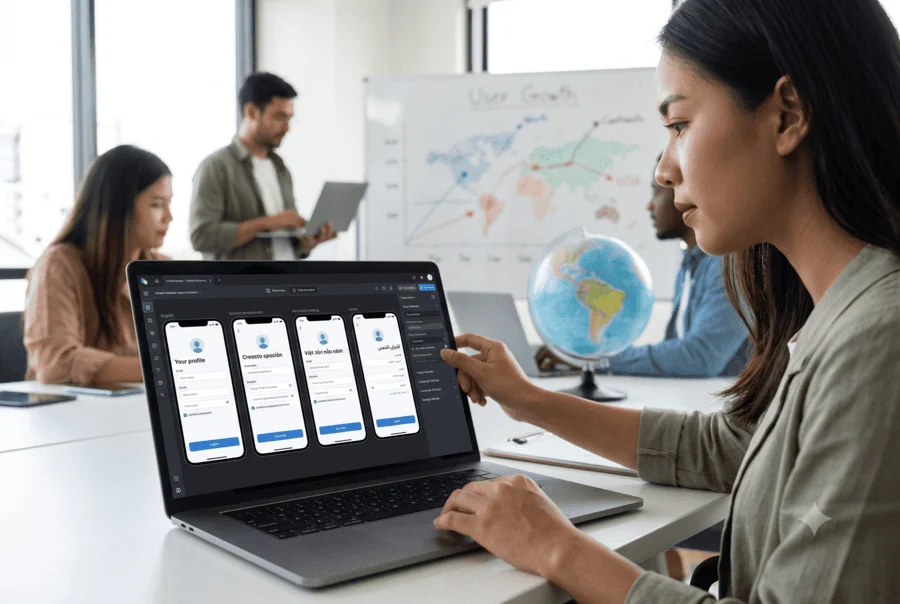
Here is a fact that should change how you build: roughly three out of four internet users do not speak English as their first language. Yet most newly built apps launch in English only and quietly hope the rest of the world adapts. They usually do not. People download apps that speak their language, respect their currency, and feel like they were made for them, not translated as an afterthought.
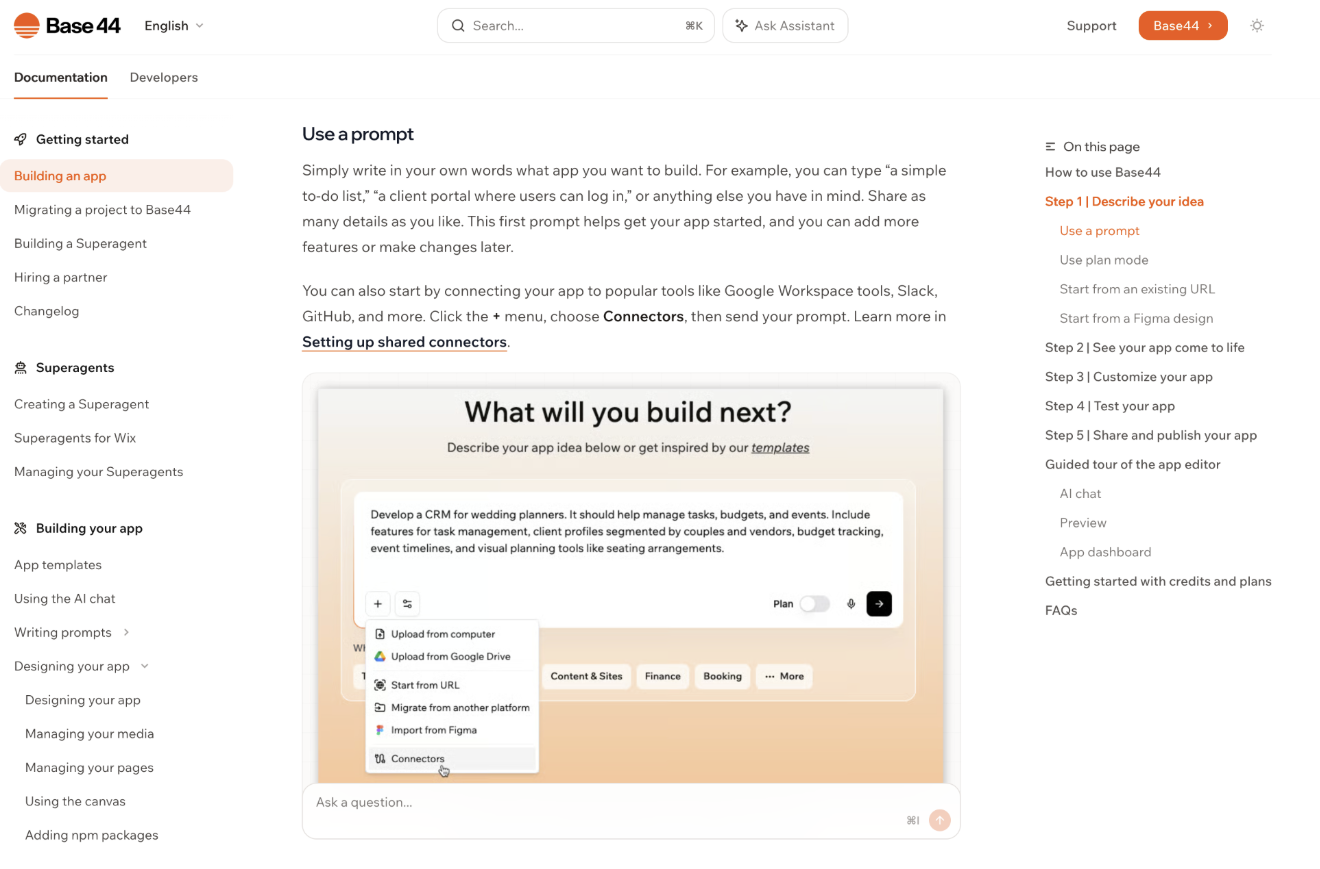
That is why localization deserves a seat at the table from the very first sprint. It is not a polish step for after launch. It is the difference between an app that stays stuck in one market and one that travels. The good news is that building for multiple markets no longer requires a huge team or a fat budget. Base44 powers an AI app builder that lets you shape a localized app from the start, while everything is still flexible and cheap to change. Let's look at how to use that head start well.
Localization Is a Business Decision Before It Is a Technical One
It is tempting to think of localization as a translation task you hand off near the finish line. It is not. It is a strategy. The choice of whether to localize, and which markets to chase first, should happen before you write a single line of app logic.
Why so early? Because retrofitting localization into a finished app is expensive and messy. When text, layout, and logic are tangled together, every new language means hunting through code, breaking screens, and fixing them one by one. Decide late, and you pay twice.
Decide early, and the whole picture changes. Founders using an AI App Builder from Base44 can bake localization into the foundation while the build is still fluid. The right tooling turns early localization from a nice theory into a practical default. You pick your target markets, you structure the app to support them, and you move forward without painting yourself into a corner.
Think of it like building a house. Plumbing for a second floor is simple before the walls go up and a nightmare after. Localization works the same way.
The Markets That Reward Localized Apps and the Ones That Will Not Wait
So where is the opportunity biggest? A few high-growth regions reward localized apps in a big way, and punish English-only ones just as sharply.
- Southeast Asia is a mobile-first powerhouse with hundreds of millions of new internet users, most of whom prefer their own languages over English. Apps localized for Indonesian, Thai, or Vietnamese users routinely see stronger download numbers and higher engagement than their English-only rivals. People simply trust an app more when it speaks to them naturally.
- Latin America rewards Spanish and Portuguese localization with noticeably better conversion. Studies on app store behavior consistently show that localized listings lift install rates, and a properly localized checkout flow can lift conversions because users understand exactly what they are paying and in which currency.
- The MENA region adds another layer: language plus layout. Arabic reads right-to-left, so a localized app there is not just translated, it is mirrored. Apps that handle right-to-left design well stand apart immediately, while those that paste Arabic into a left-to-right layout feel broken and lose users fast.
The pattern across all three is the same. These markets grow quickly, and they reward apps that meet users in their own language and context. An English-only product is not just neutral there. It actively signals "not made for you."
What Localization Actually Covers
The biggest mistake teams make is treating localization as swapping one set of words for another. Translation is part of it, but only part.
True localization covers:
- Language and Translation that reads naturally, not literally.
- Date and Number Formats, because 03/04 means March 4 in some places and April 3 in others.
- Currency, shown in the user's money with the right symbol and placement.
- Right-to-Left Layout for languages like Arabic and Hebrew.
- Culturally Appropriate Imagery and Color, since a color or image that delights one audience can offend another.
- Local Legal and Regulatory Rules, like privacy regulations similar to GDPR, that vary by region.
Here is the common trap. A team translates every button and label, ships it, and assumes the job is done. But all the underlying UX assumptions still reflect the home market. The app reads in another language, yet it still feels foreign. Flows make sense only if you already think in English.
That is why localization is a UX discipline as much as a content one. You are not just changing words. You are reshaping the experience so it feels native to someone who has never heard of your home market.
Building for the World From the First Sprint
Good news: a handful of early decisions make localization far easier to pull off later.
- Design for Text Expansion. Translated strings are often 30 to 40 percent longer than English. German and Finnish words can blow past your button width fast. Leave room in your layout so longer text does not break your screens.
- Separate Content from Code. Keep your text in dedicated files using internationalization (i18n) libraries instead of hard-coding words into your screens. This means you can add a language without rebuilding the app, just by adding a new set of strings.
- Plug in a Translation Management System. These tools connect to your build pipeline so translators can work without touching code, and updates flow back into the app automatically. No more emailing spreadsheets back and forth.
Think of this as a setup cost you pay once. It feels like extra work on day one, but it saves you from painful rework every time you enter a new market. AI-assisted build tools are starting to bake these defaults into the initial scaffolding, so the foundation for going global comes ready out of the box rather than as a later scramble.
How to Know If Your Localization Strategy Is Actually Working
Once you launch in a new market, the data tells you whether your localization is doing its job. Watch these signals per locale:
- Activation rates by region. Are new users in each market actually getting started, or dropping off early?
- Language-specific retention curves. Do users in one language stick around while another quietly leaves?
- Support ticket volume by locale. A sudden spike in one region often signals a localization gap, like a confusing flow or a broken layout.
- App store ratings by country. Low ratings in one market with high ratings elsewhere point to a fit problem, not a product problem.
Set up a simple dashboard that breaks these numbers down by locale rather than lumping everyone together. A global average can hide a market that is struggling badly.
Here is the tricky part. Sometimes a market underperforms even though the translation is perfect. When that happens, the issue is usually cultural fit, not language. Maybe the imagery feels off, the payment method is unfamiliar, or a flow assumes a habit users in that region do not share. Fix the experience, not just the words.
The World Was Always Your Market
Localization can sound like one more weight on an already hard build. Flip that thinking. Localization is the natural extension of building something genuinely worth using. If your app helps people, it can help people everywhere, and the only thing standing in the way is whether you let them in.
You do not need to conquer the planet on day one. Pick one international market alongside your primary one and localize it from launch. One focused, well-localized market beats five half-baked ones.
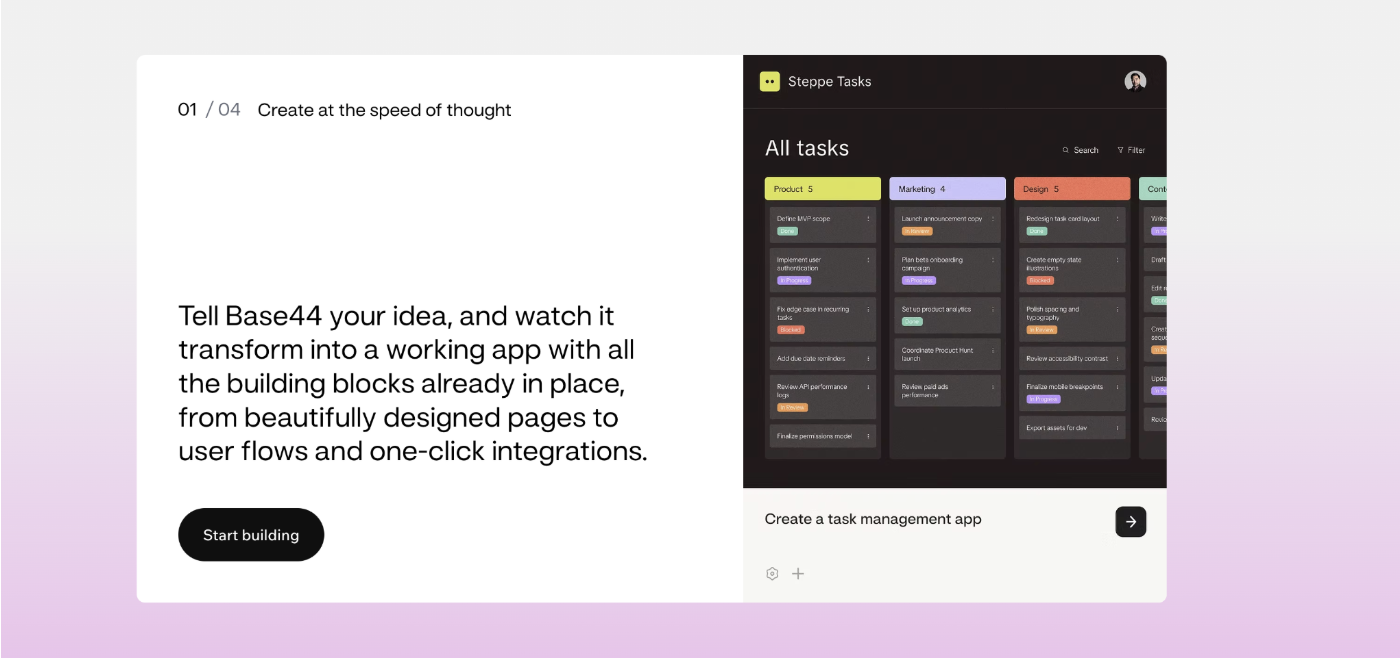
Here is your concrete first step. Audit the top three UX flows in your base44 app, like signing up, completing the core action, and paying. For each one, ask a simple question: would a user in your target market understand this without the English mental model? Wherever the answer is no, you have found your starting point.
The tools to do this are cheaper and faster than ever. The world was always your market. Now you can actually reach it.
Frequently Asked Questions
- How Much does it Typically Cost to Localize an App for a New Market? Costs vary widely based on how much content you have and how deep you go. Pure text translation is the cheapest piece, while full localization including layout, imagery, and testing adds more. The smart move is to build with localization in mind from the start, which dramatically lowers the cost of each new market you add later.
- Should I Localize my App Before or After Finding Product-Market Fit? Generally, nail product-market fit in your primary market first, then localize. That said, you should build the localization-ready foundation early, even before you translate a word. This way you can move fast into a second market the moment fit is proven, without a painful rebuild.
- What is the Difference Between Localization and Internationalization (i18n vs l10n)? Internationalization (i18n) is the technical groundwork that makes your app capable of supporting multiple languages and regions, like separating text from code. Localization (l10n) is the actual work of adapting the app for a specific market, including translation, formats, and cultural fit. In short, i18n makes localization possible, and l10n is what users see.
- Which Languages Should a Startup Prioritize when Going Global for the First Time? Follow your data and your opportunity. Spanish, Portuguese, and major Southeast Asian languages open large, fast-growing markets, while Arabic unlocks the MENA region if you can handle right-to-left layout. Pick one market where demand signals are strongest rather than spreading yourself thin across many.
- Can AI Tools Help Automate Any Part of the App Localization Process? Yes, quite a lot of it. AI can generate first-draft translations, flag text that will overflow your layout, and help scaffold a localization-ready structure from the very first build. You still want human review for tone and cultural nuance, but AI removes much of the repetitive groundwork so you can move faster.